For millions of older and disabled people in England, the free bus pass is more than just a way to get around. It stands for freedom, low cost, and the ability to stay in touch with family, health care, and community life.
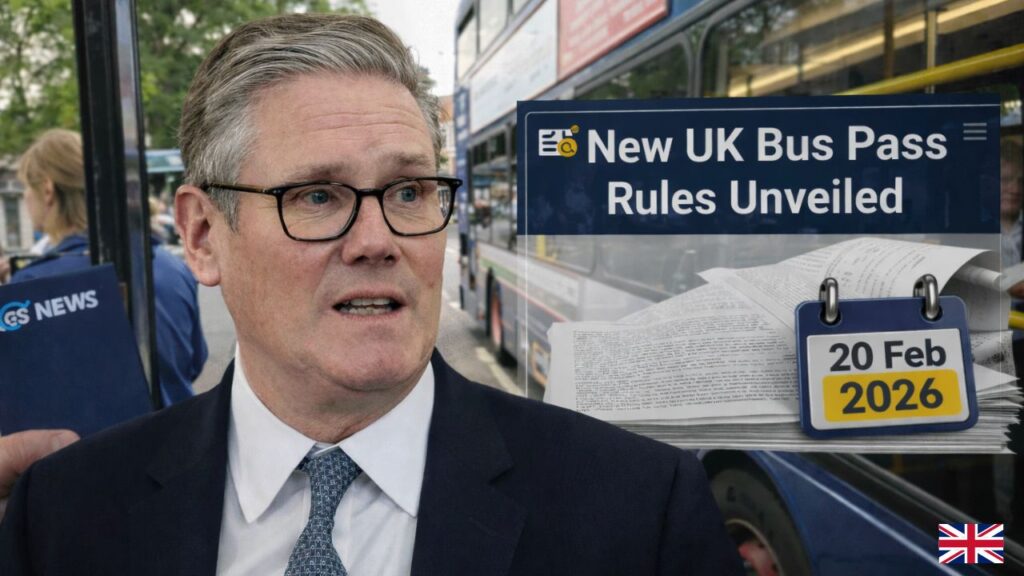
New rules that will change the UK’s free bus pass system will go into effect on February 20, 2026. While the main benefit stays the same, a number of important changes will affect eligibility checks, travel times, and how things are run.

This is a clear and complete list of what is changing, who will be affected, and what you need to do.
 UK Minimum Wage Increase 2026: New Hourly Rates, Start Date and What Workers Should Expect
What is the plan for free bus passes?
The English National Concessionary Travel Scheme gives people in England free bus passes.
It lets older and disabled people who meet the requirements ride local buses for free during off-peak hours.
The central government pays for the program, and local councils run it.
There are different rules for different programs in Scotland, Wales, and Northern Ireland, which are run by their own governments.
Who is eligible right now
When you reach State Pension age in England, you can get a free bus pass for older people.
To be eligible, disabled applicants must meet certain criteria related to their mobility, vision impairment, or other qualifying conditions.
Local councils, not the central government, handle applications.
The Department for Transport is in charge of the scheme on a national level.
What Will Change on February 20, 2026
The changes for 2026 are mostly about three things:
Updates to check eligibility
Requirements for digital renewal
Clarifications about travel time
It’s important to note that the free bus pass itself is not going away.
However, the rules for getting passes are getting stricter to make sure that only eligible people have them.
New Eligibility Checks
Starting on February 20, 2026, councils will use better ways to check passes when they give them out or renew them.
This could include:
Checks for proof of residency that are stronger
Checking the National Insurance number
In some places, digital ID confirmation is available.
The goal is to cut down on duplication and stop abuse.
For most real applicants, the process will still be easy.
The Process of Digital Renewal
A lot of councils are switching to online renewal systems.
There may still be paper renewals, but digital platforms are being given more attention.
You might be asked to do the following if your pass runs out in 2026 or later:
Upload proof of who you are
Check the address information
Check your eligibility online
People who don’t have internet access can still get help by calling a council helpline or going to a support group in person.
Clarifications about travel time
As of now, older people in England can use their bus passes:
From 9:30 a.m. to 5:00 p.m. Monday through Friday
On weekends and bank holidays, all day long
The 2026 update makes these time limits even stronger, especially during the morning rush hour.
Some local governments may put up clearer signs and enforce them better to stop people from misusing them during restricted hours.
Depending on the policy of the local government, people with disabled bus passes may still have more travel rights.
Are Free Bus Passes Going Down? No.
The plan is still in place.
There has been no announcement across the country that eligible pensioners or disabled residents will no longer be able to ride the bus for free.
But councils that are short on money may look at local improvements like companion passes or longer peak-hour travel times.
These choices are different in each area.
Changes in Wales, Scotland, and Northern Ireland
Scotland has a national program called the National Entitlement Card system.
Wales has its own program for discounted travel.
Northern Ireland’s own regional authority handles travel concessions.
The changes on February 20, 2026, mostly affect England, but devolved governments may make their own changes at a later date.
Effect on Retirees
In England, the age at which you can get a State Pension is also the age at which you can get a bus pass for older people.
The age at which you can get a bus pass also goes up as the State Pension age goes up.
This alignment will still be the same in 2026.
People who already have valid passes won’t lose their right to them just because of the administrative update.
What Should You Do If Your Pass Is About to Expire?
If your bus pass is set to expire in early 2026:
Look at the date on the card to see when it will expire.
Your local council will send you reminders to renew.
If asked, get proof of your address ready.
To avoid problems, renewal should be done before the due date.
Passes that are lost or stolen
The steps for replacing things are still the same.
Most of the time, you will need to:
Tell your local council about the loss.
Pay a small fee to get a new one.
Check the details of your identity.
The new rules may mean that ID checks are more strict.
Why These Changes Are Taking Place
The main reasons for the update are:
Stopping fraud and copying
Making digital records more accurate
Making sure that money is properly distributed
Making administration easier
Concessionary travel costs the government a lot of money. Keeping accurate records is important for long-term sustainability.
Decisions made by local authorities and budget pressures
The national scheme guarantees a minimum amount of money, but local councils can give more.
These could be:
Extensions for peak-hour travel
Travel with a friend for disabled pass holders
More local routes
But councils have to balance their transport budgets with other financial pressures.
For more information, residents should contact their local government.
Accessibility is still a top priority.
The plan still helps:
Living on your own
Getting to healthcare
Taking part in social activities
Less loneliness
For a lot of older people, being able to ride the bus for free is very important for their health.
The update for 2026 does not change that rule.
What You Should Do Right Now
If you already have a bus pass:
Make sure your contact information with your council is correct.
Look at the date of expiration.
Keep an eye on official council communications.
If you want to apply soon:
Make sure you are old enough to qualify.
Get the paperwork you need.
Apply through the official websites of the council.
Don’t depend on social media posts that haven’t been checked out.
Questions that come up often
Are they cancelling the free bus pass?
No, the plan is still in place.
Do I have to start over and apply again?
Only if your pass runs out or your situation changes.
Are the times of travel changing?
Core off-peak rules are still in effect.
Does this have an effect on Wales or Scotland?
Mostly England, but devolved governments run their own programs.
Important Things to Keep in Mind
The plan goes on until February 20, 2026.
There will be stronger checks on who is eligible.
There will be more digital renewals.
The rules for travelling during off-peak hours stay the same.
The age for state pensions is still the same.
Last Thoughts
Headlines about changes to the rules can sound dramatic, but the truth is more measured.
The free bus pass system in the UK is still going strong. The update on February 20, 2026, is more about making the system work better than taking away benefits.
For most people who have passes, their daily travel will stay the same. The main difference is that the renewal and verification processes have been updated.
You shouldn’t have too much trouble if you keep your information up to date and respond to official renewal notices.
Millions of people in England still benefit from free bus travel, and that promise of accessible transport will last until 2026, even with the new rules.