Reports that a new driving test framework for people over 65 will be in place in 2026 have quickly gotten the attention of drivers all over the UK. For a lot of older drivers, the car is a way to be independent, get around, and stay in touch with family and friends. So it’s understandable to be worried when headlines say that licenses might be “at risk.”
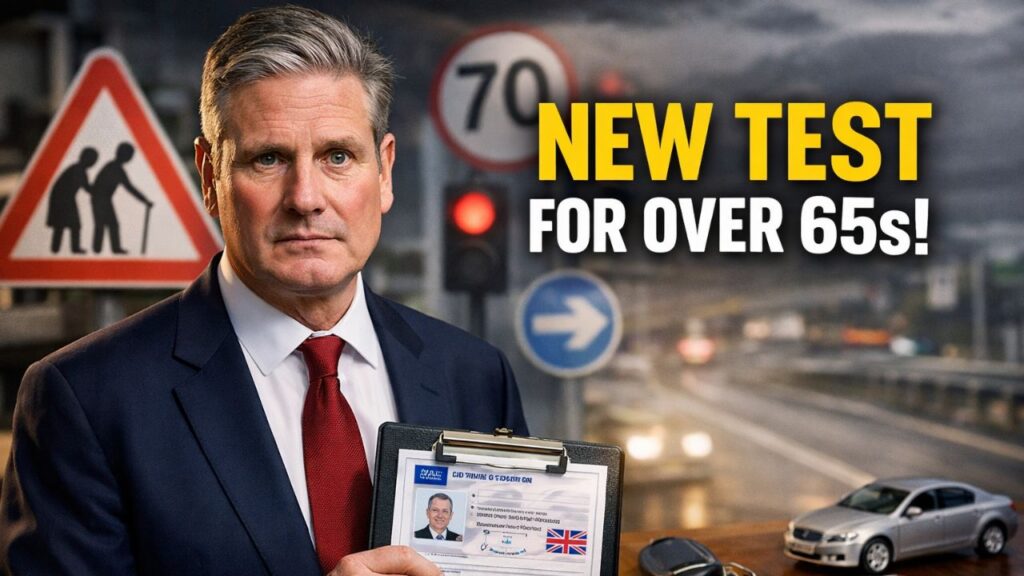
But what is really changing? Is it necessary to retest at 65? Could experienced drivers suddenly lose their right to drive? And how does the process really work in the UK?

This is a clear, useful guide to what the changes in 2026 mean, who they might affect, and what older drivers should do next.
 UK £450 Cost of Living Payment February 2026: Eligibility Rules, Payment Dates and Who Can Claim
What Is Actually Known
At the moment, the UK does not require people to take a driving test when they turn 65. However, new rules that will take effect in 2026 will affect how older drivers renew their licenses, make medical declarations, and have their fitness to drive checked.
The Driver and Vehicle Licensing Agency is in charge of driving licenses in Great Britain.
According to current law:
- At age 70, drivers must get a new license.
- Every three years after age 70, you have to renew your license.
- You have to honestly say how fit you are for medical reasons.
The 2026 update focuses on making health checks stronger and making sure that people report their own health accurately, rather than requiring everyone to take a test at 65.
Why People Over 65 Are Being Talked About
The formal age for renewal is 70, but more and more policy talks have been about drivers who are 65 and older.
This is why:
- As we get older, our reaction times can change.
- Some medical conditions happen more often.
- We check road safety data on a regular basis.
Authorities are thinking about whether earlier screenings or clearer medical requirements could lower risk without unfairly singling out safe, experienced drivers.
Do you have to retake the test at 65?
There is no universal driving test required at age 65.
But changes could include:
- More strict medical forms
- Better advice for GP reporting
- More clear rules for certain health problems
- Targeted assessments when there are signs of risk
The focus is on health-based review instead of automatic retesting just because of age.
What Could Put a License in Danger
A driver may lose their license if they:
- Doesn’t tell about a relevant medical condition
- Doesn’t meet vision standards
- Has a condition that makes it hard to control a car safely
- Gets medical advice not to drive
The DVLA can ask for medical reports and, in some cases, an evaluation.
Some of the conditions that are often looked at are:
- Epilepsy
- Very bad heart problems
- Dementia
- Diabetes complications that are more serious
- Vision problems
Not all diagnoses mean that a license will be taken away. Each case is looked at on its own.
What Medical Declarations Do
Drivers must check to see if they have any medical conditions that need to be reported when they renew their license.
Failure to disclose relevant information can result in:
- Fines
- Insurance that isn’t valid
- Revocation of a license
The 2026 update is likely to stress the need for medical professionals and licensing authorities to talk to each other more clearly.
How the Process of Assessment Works
If someone reports a medical problem, the DVLA may:
- Call your doctor
- Ask for reports from specialists
- Set up a driving test
- Give a short-term license that can be reviewed later
In many cases, licenses are not permanently taken away. Instead, they are given for shorter periods of time, like one or three years, depending on how stable the person’s health is.
Will Experienced Drivers Automatically Lose Their Licence? No.
Just because someone turns 65 or 70 doesn’t mean they automatically lose their driving rights.
Most older drivers stay safe on the road for many years.
Data consistently indicates that experience frequently mitigates specific age-related changes.
Tests for your eyes and standards for your vision
Drivers should be able to read a license plate from 20 meters away.
If your eyesight isn’t good enough, corrective lenses might be all you need.
If you don’t meet the minimum visual standards without correction, your license could be taken away.
That’s why regular eye exams are so important.
Checks for Reaction Time and Cognition
Cognitive health and reaction times are sometimes talked about in policy discussions.
But any official evaluation would have to find a balance between:
- Safety on the road
- Rights of individuals
- Practical feasibility
It would be very expensive for the government to run large-scale retesting programs.
What this means for insurance
As you get older, your insurance premiums usually go up slowly.
Insurance companies may change their policies if the terms of a license change, such as when a medical license is only good for a short time.
But getting a medical review doesn’t automatically make your insurance invalid.

Always let your insurance company know about any changes that are important.
Worries and talks with family
Family members, not authorities, sometimes raise concerns.
If family members are worried about an older driver’s safety, talking to them is usually the best thing to do.
Encouraging people to do voluntary assessments can help keep their dignity while also making sure they are safe.
Differences in the UK
The DVLA is in charge of licensing in Great Britain.
The Driver and Vehicle Agency is the same thing in Northern Ireland.
The rules are mostly the same, but the way things are done is a little different.
Scotland, England, and Wales all use the same DVLA system.
What Happens When a License Is Taken Away
Sometimes, if a license is taken away for medical reasons, you can reapply once your health is stable.
Medical proof is needed.
Some drivers get limited licenses that let them drive only under certain conditions.
Permanent revocation is not very common and is usually only given out when there are serious safety concerns.
Can You Take a Driving Test on Your Own
Yes.
For those who want to feel more secure, there are independent advanced driving tests available.
These are not punishments and don’t automatically change your license status.
They can help you find things you need to work on and boost your confidence.
How People Reacted to the Changes
There is often a lot of sensitivity around the topic of testing older drivers.
People who agree say:
- Safety on the road should come first.
- Checks on a regular basis keep everyone safe.
Critics say:
- Age alone is not a good way to tell if something is safe.
- Statistically, younger drivers are more likely to cause accidents.
Policymakers need to find a middle ground between these two points of view.
Things Drivers Over 65 Should Do
If you are 65 or older, you might want to think about:
- Making appointments for regular eye exams
- Looking over the side effects of drugs
- Letting your GP know about driving
- Checking when licenses need to be renewed
- Updating your insurance information
Being proactive lowers the chances of problems coming up out of the blue.
Is this a ban on drivers over 65?
No way.
As long as they meet medical and safety standards, older people in the UK can still drive.
The goal of the 2026 update is to improve oversight, not take away independence.
Frequently Asked Questions
Is there a new driving test for people over 65?
There isn’t a universal retest yet.
Will I automatically lose my license?
No, only medical or legal problems make a review necessary.
Do I need to let the DVLA know about changes in my health?
Yes, for conditions that need to be reported.
Can I challenge a decision?
Yes, drivers can contest decisions and send in more medical evidence.
Important Things to Keep in Mind
- No blanket retesting at 65.
- It’s important to be honest in medicine.
- Eye standards are still required.
- Licenses for a short time may be given out when needed.
- Older drivers who are safe can keep driving.
Last Thoughts
Headlines that say licenses are “at risk” for people over 65 can be scary. But the truth is more measured.
The UK’s driving rules have long required medical transparency and a new license at age 70. It looks like the 2026 updates are more about making things clearer and stronger than about requiring sudden mandatory retests.
Most experienced drivers won’t have to deal with any big changes. You can keep enjoying the freedom of the road as long as you meet the medical and eyesight requirements and renew your license correctly.